

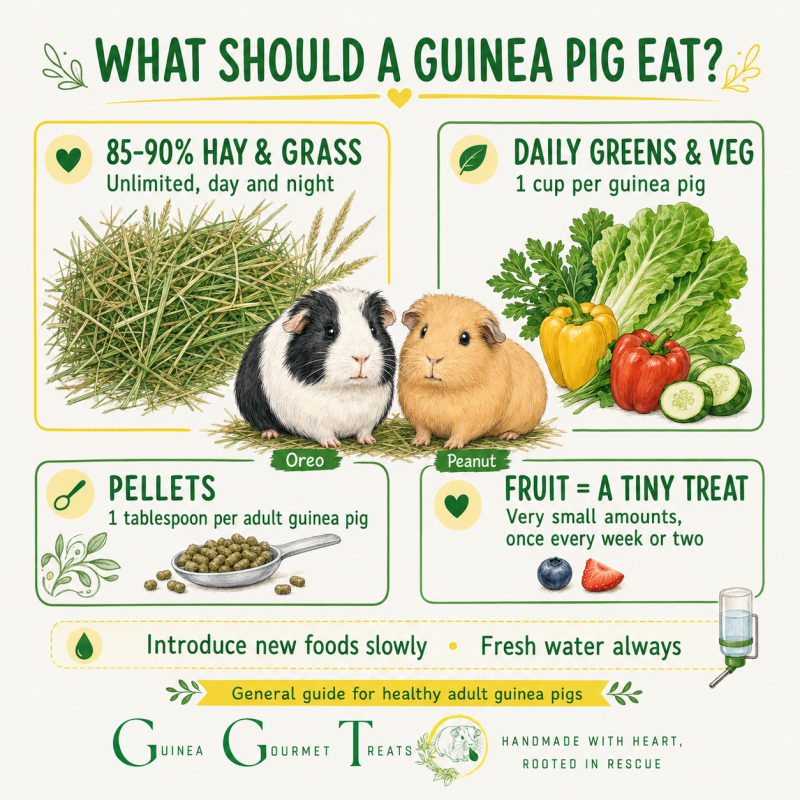
A lovely new customer recently got in touch because shopping day was coming up and they wanted to know which fruits they could buy for Oreo and Peanut, two guinea pigs who were very new to the family.
It is a brilliant question because fruit has excellent PR. It is colourful, natural and usually earns some very enthusiastic wheeking. None of that makes it an everyday food, though.
The short answer
Yes, healthy adult guinea pigs can have certain fruits—but only in very small, occasional portions.
Fruit is optional. Your guinea pigs do not need it every day and they do not need it to meet their vitamin C requirements. Their diet should centre on unlimited hay and grass, a varied daily portion of suitable greens and vegetables, a measured amount of guinea-pig pellets and constant access to fresh water.
My simple rule for new owners is:
Offer one tiny, bite-sized piece per guinea pig, once a week at most while they settle in. Every fortnight is absolutely fine too.
That deliberately cautious rule sits comfortably alongside current guidance. Woodgreen Pets Charity suggests small pieces once or twice weekly, while the PDSA recommends very small fruit treats once every week or two. The professional Merck Veterinary Manual takes an even stricter position and advises focusing on vegetables rather than sugary fruits.
In other words, fruit is not essential—and more is definitely not better.
What should make up a guinea pig’s everyday diet?
1. Hay and grass: approximately 85–90%
Guinea pigs need constant access to good-quality feeding hay and/or suitable fresh grass. This is not simply bedding or something to nibble when they feel like it. Long fibre keeps the digestive system moving and helps wear down teeth that grow continuously.
They should have access day and night, with fresh piles topped up regularly. Hay is the foundation; everything else supports it.
2. Fresh greens, vegetables and safe forage: daily
Fresh plant foods provide variety, hydration and important nutrients, including vitamin C. The PDSA recommends around one cup of fresh vegetables, greens and suitable forage per guinea pig each day, using a varied selection rather than a huge portion of one food.
Useful shopping-list choices include:
Bell pepper, especially red or yellow pepper
Romaine or gem lettuce
Cucumber
Celery
Coriander
Small, sensible amounts of other suitable leafy greens and correctly identified forage
Bell pepper is particularly useful because it supplies vitamin C without relying on a sugary fruit treat. Botanically, peppers, cucumber and tomato are fruits—but in feeding terms, we treat them as lower-sugar fresh produce rather than sweet fruit.
3. Guinea-pig pellets: measured, not unlimited
Choose a uniform, grass-based pellet made specifically for guinea pigs rather than a colourful muesli mix. For a healthy adult guinea pig, the PDSA recommends around one tablespoon per day. Follow the manufacturer’s instructions and seek veterinary advice if your guinea pig is young, pregnant, nursing, underweight or unwell.
Pellets should support the diet, not crowd out hay.
4. Fresh water: always available
Provide clean water continuously and check bottles or bowls every day. Make sure bottle spouts are working properly and that bowls have not become contaminated or tipped over.
5. Fruit: the smallest part
Fruit belongs firmly in the treat category. Its natural sugar still counts as sugar, and offering too much can add unnecessary calories and disturb a digestive system designed for a fibrous, grass-based diet.
Which fruits can guinea pigs have?
For a healthy adult guinea pig with no relevant medical condition, these are straightforward occasional choices:
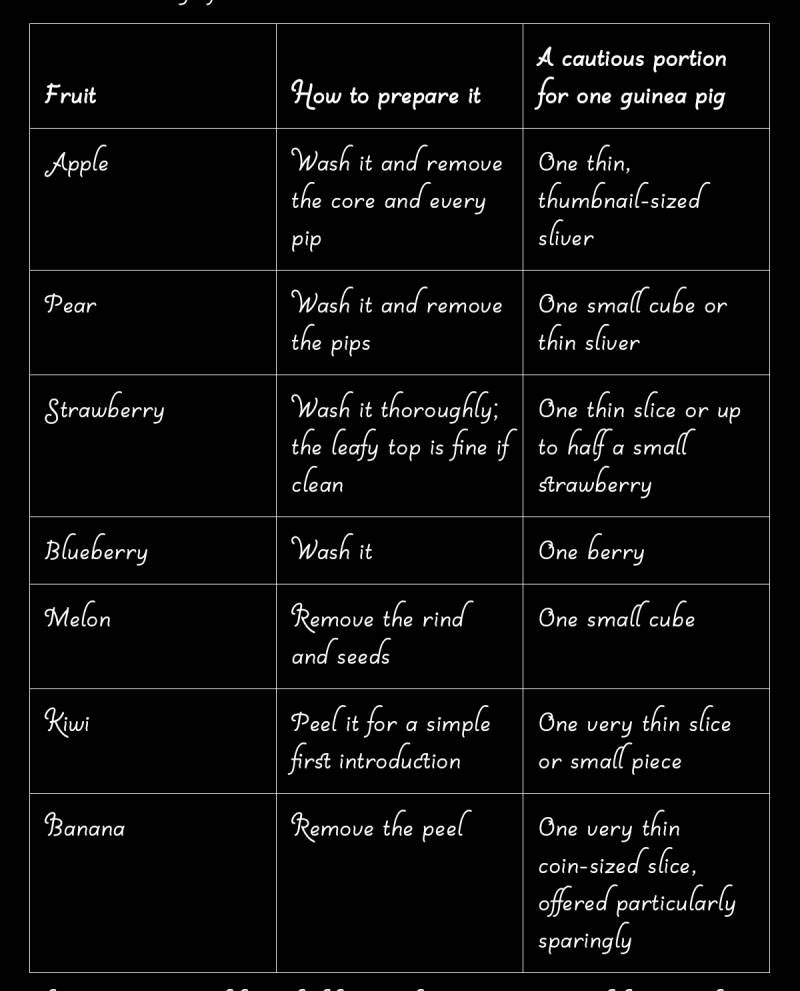
These are practical household examples, not targets to fill. A smaller piece is fine. Guinea pigs do not measure love by the size of the fruit chunk—even if their dramatic little faces suggest otherwise.
For Oreo and Peanut, I would offer one tiny piece each in separate spots. That prevents the quicker or more confident pig from scoffing both portions and lets you see whether each guinea pig actually ate theirs.
What about dried fruit?
Dried fruit has had much of its water removed, so its sugar and calories are concentrated into a much smaller-looking piece. Treat it as an extra-small, occasional enrichment food—not as part of the daily fresh-food allowance.
If you choose something from the Guinea Gourmet Treats Treats and Fruits collection, break suitable dried fruits into tiny pieces and make the pack last. Natural does not mean unlimited, and I would rather be honest about that than encourage you to empty treats into a bowl.
Fruits and foods I would leave off a beginner’s shopping list
Avoid:
Avocado
Rhubarb
Fruit stones, seeds and pips
Tomato leaves, stalks and vines—the ripe tomato flesh is the edible part
Tinned fruit, fruit in syrup or sweetened fruit products
Fruit juices and smoothies
Sticky, honey-based treats
Yoghurt drops and brightly coloured cereal treats
Anything mouldy, spoiled or unidentified
Advice about citrus varies. Some sources allow a little orange, while the RSPCA advises avoiding citrus fruits. For a new owner, I would keep it simple and leave citrus off the list. Bell pepper and suitable greens provide vitamin C without needing an acidic, sugary fruit.
How should I introduce fruit to new guinea pigs?
Oreo and Peanut are new to their family, and that matters. A house move is already a big change, so this is not the moment to introduce a supermarket’s worth of new foods at once.
Find out what they already ate. If possible, ask their breeder, rescue or previous home about their normal hay, pellets and fresh foods.
Keep the basic diet stable. Sudden food changes can upset a guinea pig’s sensitive digestive system.
Introduce one new food at a time. Start with a smaller-than-normal piece and build variety gradually.
Watch both guinea pigs. Check appetite, water intake and droppings, and weigh them regularly.
Remove uneaten fresh food. Do not leave fruit sitting around until it becomes warm, dirty or spoiled.
If a guinea pig stops eating, produces fewer or no droppings, develops persistent soft stools or seems unwell, contact an exotics-savvy vet urgently. Guinea pigs can deteriorate quickly when their digestive system slows down.
A simple shopping list for new guinea-pig owners
If you are standing in the supermarket wondering what to buy, prioritise:
Red or yellow bell pepper
Romaine or gem lettuce
Cucumber
Celery
Coriander or another suitable herb
One fruit to introduce slowly, such as a small punnet of blueberries or one apple for the household
Do not buy five different fruits for the guinea pigs. Buy a varied selection of suitable greens and vegetables, then choose one fruit as an occasional extra. That creates a far healthier basket and makes it much easier to identify which new food caused a problem if their digestion changes.
Frequently asked questions
Can guinea pigs eat fruit every day?
I would not feed sweet fruit daily. It is unnecessary and can displace the fibrous foods they genuinely need. Keep it tiny and occasional.
What is the best fruit for vitamin C?
Do not rely on sweet fruit for vitamin C. Bell pepper is a much more useful everyday option, alongside a varied diet of suitable greens and fresh produce. Guinea pigs with additional vitamin C needs should have a plan agreed with an exotics vet.
How much fruit should two guinea pigs have?
Give each guinea pig its own tiny piece rather than one larger piece to share. For a pair such as Oreo and Peanut, that means two tiny pieces in total, placed separately, and offered only occasionally.
Can guinea pigs eat apple pips?
No. Remove the core and all pips before offering a small piece of apple.
Is dried fruit healthier than shop-bought treats?
A plain dried fruit without added sugar or artificial ingredients may have a simpler ingredient list, but it is still concentrated and sugary. Portion control still matters. Hay-based forage and leafy plant treats will usually fit a guinea pig’s natural feeding behaviour far better.
What if my guinea pig has bladder problems, diabetes, dental disease or is overweight?
Skip generic treat advice and speak to an exotics-savvy vet. Medical conditions can change what is suitable, and an individual diet plan should always override a general blog guide.
My final take
Fruit can add a little variety and enrichment, but it should never become the colourful centre of a guinea pig’s diet. The boring-looking stuff—hay, grass and fibrous plants—is where the real magic happens.
So, for Oreo and Peanut: build the shopping list around hay, varied greens and vegetables, choose one tiny fruit treat, introduce it slowly and do not let two enthusiastic wheeks negotiate you into half the fruit bowl. They will absolutely try. 😂
At Guinea Gourmet Treats, I create natural forage and treats to complement an appropriate species-led diet, not replace it. Everything works best when hay and grass remain firmly in charge.
Sources and further reading
PDSA: Your guinea pigs’ diet
RSPCA: What to feed a guinea pig
Woodgreen Pets Charity: Feeding your guinea pigs
Merck Veterinary Manual: Housing and nutrition of guinea pigs
This article provides general information for healthy adult guinea pigs and does not replace individual veterinary advice.
Add comment
Comments