

🎄 Winter Rose Browse
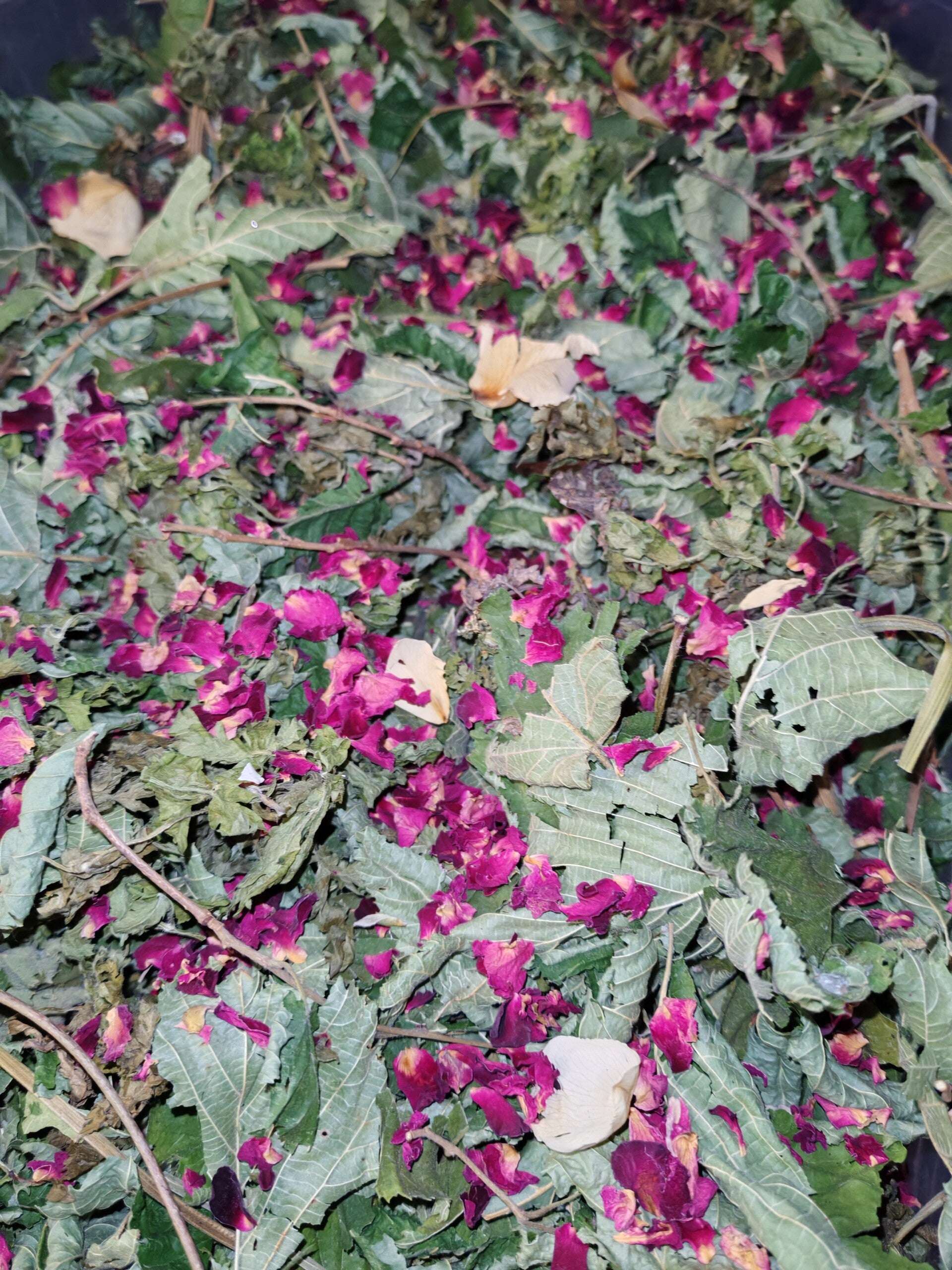
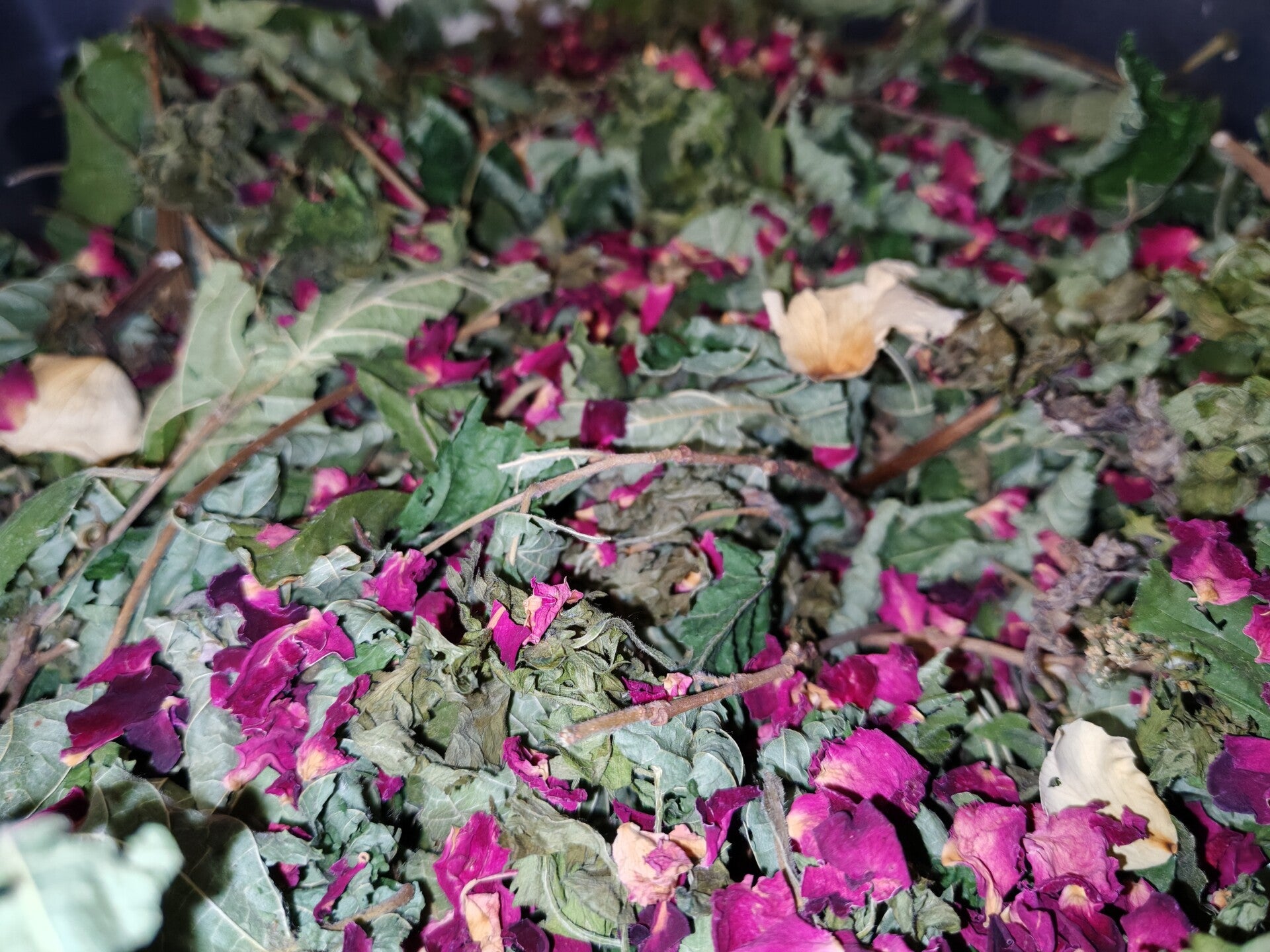
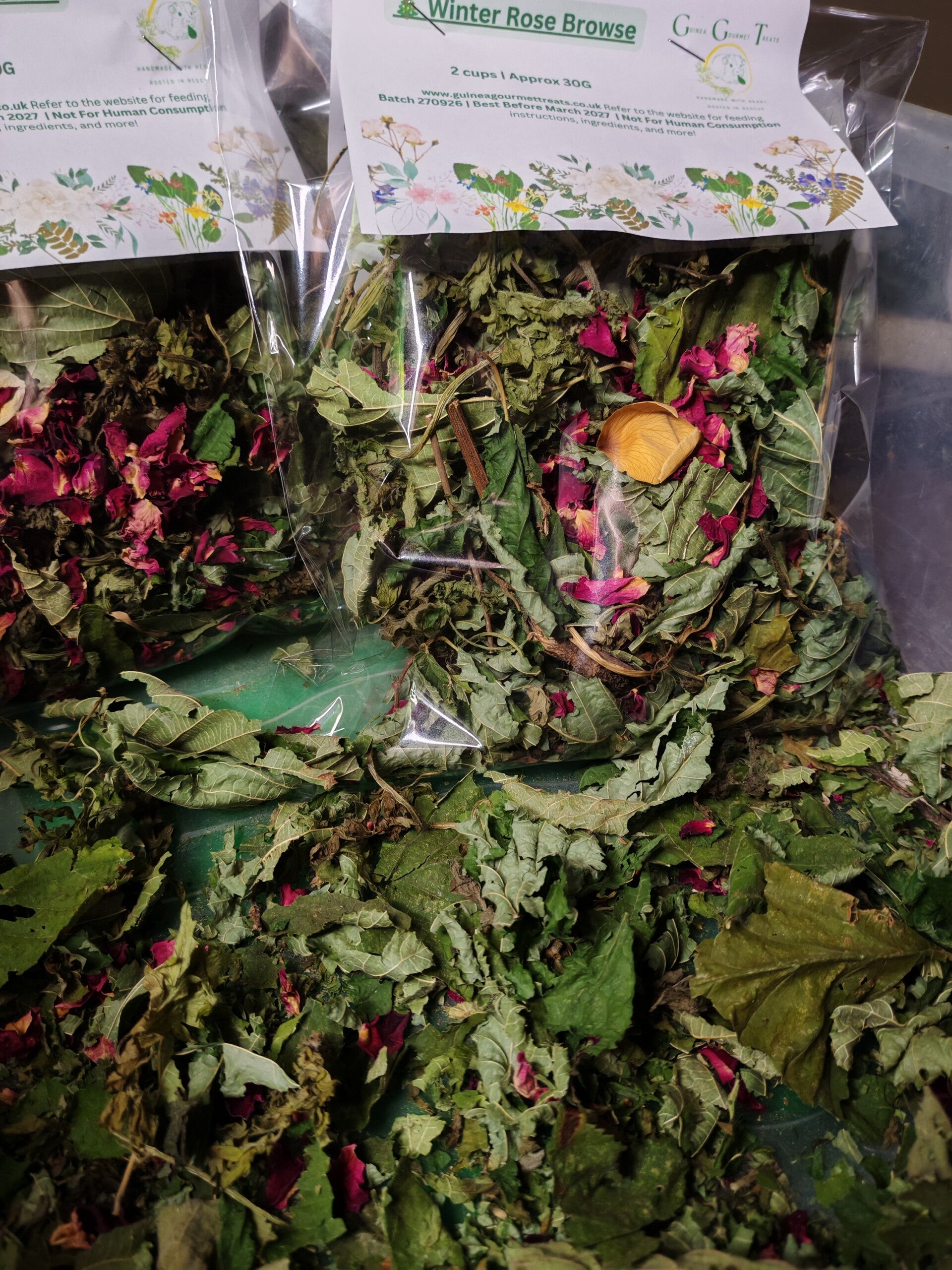
🎄 Winter Rose Browse – Festive Woodland Forage
A little winter woodland magic, with a fragrant peppermint twist! 🌿🌹🐹🐰
Size: 2 Cups | Approx. 30g
Categories: Christmas Specials • Digestion • Antioxidant • Natural Foraging • Botanical Enrichment
When winter settles over the hedgerows, the leaves grow crisp and the countryside prepares for its seasonal slumber, there's still a little magic to be found amongst nature's simplest treasures. ❄️
Winter Rose Browse is a beautifully simple, three-ingredient botanical forage inspired by peaceful woodland walks, frosty hedgerows and the delicate fragrance of a winter garden.
Combining leafy hazel, aromatic peppermint and a delicate scattering of rose petals, this festive blend brings together natural plant fibre, interesting textures and botanical aromas in one lovely woodland-inspired forage.
Hazel leaves form the heart of the mix, offering fibrous leafy browse that encourages natural grazing and exploration.
A little peppermint introduces a refreshing herbal aroma and naturally occurring botanical compounds, whilst delicate rose petals provide a gentle floral finishing touch.
The result is a festive forage that looks and smells wonderfully seasonal, without relying on sugary fruits, brightly coloured treats or unnecessary fillers.
Perfect for scattering through hay, hiding in enrichment activities or gently moistening for companions who enjoy softer leaves.
Because sometimes, the loveliest Christmas treats are the simplest things nature has to offer! 💚
🌿 Ingredients & Natural Benefits
🍃 Hazel Leaves – 85%
A little woodland wonder
Hazel leaves (Corylus spp.) form the foundation of Winter Rose Browse, bringing the natural character of British woodlands and hedgerows into this festive forage.
Hazel provides an interesting alternative leafy texture to familiar meadow greens, making it particularly useful for animals that enjoy browsing and investigating different plant materials.
The leaves naturally contain structural plant fibre and polyphenols, including tannins, which contribute to their distinctive botanical properties.
Why we've included them:
-
🌿 Digestive Wellbeing: Contribute natural plant fibre alongside a balanced, high-fibre diet.
-
🍃 Antioxidant Compounds: Contain naturally occurring phenolics associated with antioxidant activity in laboratory research.
-
🌳 Natural Woodland Browse: Introduce tree leaves alongside traditional grasses and meadow plants.
-
🐾 Foraging Enrichment: Encourage searching, browsing and exploration.
-
💚 Botanical Variety: Provide additional leaf shapes, textures and naturally occurring plant compounds.
-
🌱 Natural Feeding Behaviours: Offer interesting leafy material for animals that enjoy grazing and investigating their surroundings.
Botanical Note: Hazel leaves naturally contain tannins. These are common plant compounds, but excessive intake can reduce the availability of certain nutrients.
Winter Rose Browse is therefore intended as supplementary forage rather than a replacement for hay, grass or a varied selection of suitable greens.
🌿 Peppermint Leaves – 10%
A refreshing touch of winter greenery
Peppermint (Mentha × piperita) brings a wonderfully distinctive aroma to Winter Rose Browse, adding a fresh herbal character that complements the earthy hazel leaves and delicate rose petals.
A member of the mint family, peppermint is recognised for its naturally occurring aromatic compounds, including menthol and menthone, alongside polyphenols such as rosmarinic acid.
Its distinctive fragrance provides an interesting sensory contrast to more familiar leafy browse.
Why we've included it:
-
🌿 Digestive Wellbeing: Adds supplementary plant fibre to a species-appropriate diet.
-
🍃 Natural Antioxidants: Contains naturally occurring phenolic compounds, including rosmarinic acid.
-
🌱 Aromatic Enrichment: Introduces a distinctive herbal fragrance that encourages investigation.
-
🐾 Natural Foraging: Adds variety to the aromas and textures discovered during feeding.
-
💚 Botanical Diversity: Complements hazel leaves with a different plant family and chemical profile.
-
❄️ Seasonal Character: Provides a fresh, minty aroma that suits the winter woodland theme.
Botanical Note: Peppermint has a long history of traditional digestive use in humans.
However, research into peppermint essential oil, concentrated extracts or human herbal preparations should not be taken as proof that whole dried peppermint leaves treat digestive conditions in guinea pigs or rabbits.
This blend contains dried peppermint leaves only, not essential oils or concentrated extracts.
🌹 Rose Petals – 5%
A delicate winter floral finish
Rose petals (Rosa spp.) complete Winter Rose Browse with a gentle scattering of natural colour, floral aroma and botanical variety.
Their delicate texture contrasts beautifully with the leafy hazel and aromatic peppermint, creating a blend that feels festive without relying on artificial decorations or sweetened ingredients.
Rose petals contain naturally occurring plant compounds, including flavonoids and other phenolics, although their composition varies considerably between varieties.
Why we've included them:
-
🌹 Natural Colour: Add a delicate floral appearance without artificial colours.
-
🍃 Botanical Antioxidants: Contain naturally occurring phenolic compounds.
-
🐾 Sensory Enrichment: Introduce another texture and subtle natural aroma.
-
🌿 Dietary Variety: Provide an additional edible botanical ingredient.
-
💚 Natural Foraging: Encourage animals to explore a mixture of leaves and petals.
-
🎄 Festive Appeal: Bring a naturally seasonal finishing touch to the blend.
Botanical Note: Only edible, untreated rose petals should be used.
Florist roses and ornamental flowers may have been treated with pesticides or preservatives unsuitable for animal consumption.
🐾 Who Can Enjoy Winter Rose Browse?
🐹 Guinea Pigs
Suitable as supplementary botanical forage.
Guinea pigs are natural grazers that benefit from access to suitable grasses, herbs and leafy plants.
Winter Rose Browse combines familiar woodland browse with aromatic peppermint and delicate rose petals, encouraging natural investigation whilst introducing a variety of botanical textures.
Potential Benefits:
-
🌿 Contributes supplementary plant fibre.
-
🍃 Introduces naturally occurring botanical compounds.
-
🌳 Provides woodland browse alongside meadow-based foods.
-
🌹 Offers varied textures and natural aromas.
-
🐾 Encourages grazing, searching and exploration.
-
💚 Creates opportunities for hay-based enrichment.
🐰 Rabbits
Suitable as supplementary botanical forage.
Rabbits naturally spend much of their day grazing, browsing and exploring their environment.
Hazel leaves, mint and edible rose petals are recognised as suitable botanical foods for rabbits, making this combination an interesting addition to their normal feeding and enrichment routine.
Potential Benefits:
-
🌿 Adds supplementary leafy fibre.
-
🌳 Encourages natural woodland-style browsing.
-
🌱 Introduces aromatic herbal variety.
-
🌹 Provides delicate floral textures and aromas.
-
🐾 Encourages natural food-seeking behaviours.
-
💚 Complements a varied selection of suitable leafy greens.
🐾 Other Companion Animals
Some individual ingredients may also be suitable for other small animals, but that does not automatically establish the suitability of this complete 85% hazel formulation.
The blend has not been sufficiently assessed for routine feeding to:
-
Degus and chinchillas.
-
Hamsters and gerbils.
-
Rats and mice.
-
Herbivorous tortoises.
-
Green iguanas.
-
Birds and parakeets.
-
Chipmunks.
-
Hedgehogs.
-
Giant African land snails.
These species are therefore not included in the recommended feeding guide.
🛒 Feeding Guide
Winter Rose Browse is a supplementary botanical forage. Offer alongside a balanced, species-appropriate diet.
-
🐹 Guinea Pigs: 1–2 level teaspoons per adult, 2–3 times weekly.
-
🐰 Small Rabbits (under 2kg): 1–2 level teaspoons, 2–3 times weekly.
-
🐰 Medium Rabbits (2–4kg): 2 level teaspoons, 2–3 times weekly.
-
🐰 Large Rabbits (over 4kg): Up to 1 level tablespoon, 2–3 times weekly.
🌿 Introduce Gradually: Begin with a small pinch and gradually increase if well tolerated.
These are suggested supplementary portions for healthy adult animals, not scientifically established dosages for this particular blend.
⚠️ Important Feeding Information & Precautions
🐹 Guinea Pig Feeding Considerations
Digestive Health
Guinea pigs require a stable, fibre-rich diet to maintain normal digestive function.
Although Winter Rose Browse contains plant fibre, it is intended to complement the much larger quantity of fibre provided by hay and grass.
-
Introduce gradually, particularly if your guinea pig is unfamiliar with hazel or peppermint.
-
Monitor appetite, droppings and general behaviour.
-
Rotate with other suitable botanical forage plants.
-
Avoid feeding excessive quantities of any one dried herb or browse plant.
Vitamin C Requirements
Guinea pigs cannot produce their own vitamin C.
Winter Rose Browse should not be relied upon as a source of vitamin C, as drying and storage may alter vitamin content.
Continue providing suitable fresh vitamin C-rich vegetables and appropriate guinea pig pellets.
Dental Health
Guinea pigs require unlimited suitable long-strand hay or grass to encourage normal chewing and tooth wear.
Dried browse leaves are an enrichment addition, not a replacement for essential hay.
Individual Health
Seek veterinary advice before introducing new forage to guinea pigs with digestive disorders, prescribed diets or other medical conditions.
🐰 Rabbit Feeding Considerations
Digestive Health
Rabbits depend on a consistent, fibre-rich diet to maintain normal digestive function.
-
Offer alongside unlimited suitable hay or grass.
-
Introduce gradually.
-
Monitor appetite and droppings after introducing new botanicals.
-
Rotate with other appropriate herbs, weeds and leafy greens.
-
Avoid sudden major dietary changes.
Hazel Leaf Content
Hazel leaves make up 85% of Winter Rose Browse.
Although hazel leaves are recognised as edible rabbit browse, the high proportion means the product should be offered as supplementary forage rather than a substantial daily green.
Aromatic Herbs
Peppermint provides a distinctive aroma, but rabbits may have individual preferences.
Some enjoy fragrant herbs readily, whilst others take time to investigate unfamiliar smells.
Introduce gradually and allow your rabbit to explore naturally.
Important: A rabbit that stops eating or producing normal droppings requires prompt veterinary attention.
🍃 Hazel Leaves & Natural Tannins
Hazel leaves contain tannins, naturally occurring polyphenolic compounds found in many trees, shrubs and other plants.
These compounds contribute to the plant's natural chemical composition and can demonstrate antioxidant activity in laboratory studies.
However, tannins may also bind to dietary proteins and other nutrients, potentially reducing their availability when consumed excessively.
For this reason:
-
Offer Winter Rose Browse in measured portions.
-
Rotate with other suitable botanicals.
-
Do not use as the sole source of leafy forage.
-
Maintain a balanced, species-appropriate diet.
-
Seek veterinary guidance for animals with specialist nutritional requirements.
The amount of tannins in the finished forage has not been measured, so the suggested serving sizes are cautious supplementary portions rather than established tannin-safe doses.
🌿 Peppermint & Aromatic Compounds
Peppermint contains naturally occurring aromatic compounds responsible for its distinctive mint fragrance.
Whole peppermint leaves are not the same as peppermint essential oil.
Concentrated oils and extracts can contain much higher levels of active compounds and should not be added to this forage.
-
Use correctly identified peppermint leaves only.
-
Introduce gradually.
-
Avoid adding essential oils, extracts or flavourings.
-
Monitor animals that are particularly sensitive to new herbs.
Traditional digestive claims associated with peppermint should not be interpreted as evidence that Winter Rose Browse treats digestive illness.
🌹 Rose Petal Safety
Rose petals are included for their natural colour, fragrance and enrichment value.
-
Use edible, correctly identified rose petals.
-
Avoid florist flowers unless their suitability for animal feeding has been confirmed.
-
Do not use pesticide-treated flowers.
-
Exclude stems, thorns and unsuitable decorative material.
-
Never use artificial scented petals or potpourri.
🐢 Why Isn't This Blend Recommended for Tortoises?
Although some herbivorous tortoises can consume hazel leaves, The Tortoise Table recommends hazel only in moderation because of its tannin content.
With 85% hazel, Winter Rose Browse is too heavily weighted towards this ingredient to recommend broadly as tortoise forage.
Tortoises benefit from species-appropriate combinations of edible weeds, grasses and browse.
A separate blend with a wider variety of suitable plants would be a more appropriate option.
🍃 Understanding Antioxidant Benefits
Hazel leaves, peppermint and rose petals contain naturally occurring phenolic compounds.
Certain compounds have demonstrated antioxidant properties in laboratory research.
However, this does not establish that consuming Winter Rose Browse produces a clinically meaningful antioxidant effect in guinea pigs or rabbits.
The product is intended to provide botanical diversity, natural plant compounds and enrichment, rather than treat or prevent illness.
❤️ General Feeding Advice
-
Offer as supplementary botanical forage, not a complete food.
-
Introduce unfamiliar plants gradually.
-
Rotate with other suitable herbs and leafy plants.
-
Maintain unlimited species-appropriate hay or grass.
-
Provide fresh drinking water at all times.
-
Monitor appetite, droppings and behaviour.
-
Store in a cool, dry place away from direct sunlight and moisture.
-
Do not feed mouldy, damp or spoiled forage.
-
Consult an appropriately experienced vet before feeding to animals with medical conditions, prescribed diets or specialist nutritional requirements.
💧 Optional Rehydration Instructions
Enjoy dry or gently softened!
Winter Rose Browse can be offered as traditional dried forage or lightly moistened for companions who prefer softer leaves.
Hazel leaves and peppermint are expected to become more pliable when moistened, whilst the delicate rose petals may soften more quickly.
How to Rehydrate:
-
💧 Measure: Place the desired serving into a clean bowl.
-
🌡️ Add Water: Add a small amount of lukewarm drinking-quality water, just enough to moisten the botanicals.
-
⏳ Allow to Soften: Leave for approximately 5 minutes.
-
🌿 Check Texture: Stir gently and check whether the leaves have softened.
-
🐾 Serve: Offer at room temperature.
-
🗑️ Discard Leftovers: Remove uneaten moistened forage promptly.
-
🚫 Do Not Store Wet: Prepare only the amount needed for immediate use.
-
⚠️ Water Only: Never add sugar, honey, milk, essential oils or flavourings.
-
🔥 Never Serve Hot.
Important: Rehydration changes the texture but does not replace fresh drinking water, appropriate dental care or veterinary treatment.
🎁 Festive Feeding & Enrichment Ideas
❄️ Frosty Woodland Scatter
Sprinkle a little Winter Rose Browse through suitable hay to encourage natural searching and grazing.
🌹 Winter Rose Treasure Hunt
Hide small portions amongst safe enclosure furnishings, allowing curious companions to discover the different leaves and petals.
🌿 Peppermint Hay Surprise
Scatter a little through hay to introduce an aromatic element to everyday foraging.
🐾 Woodland Browse Bowl
Offer a measured serving alongside other suitable dried botanicals to introduce a range of natural leaf shapes and textures.
🎄 Christmas Foraging Surprise
Tuck a small portion into a species-safe enrichment toy or hay-filled activity.
💧 Softened Winter Botanicals
Lightly moisten a small serving for animals that prefer softer leaves, once the finished blend has been tested.
Always choose enrichment materials suitable for your animal's species and individual requirements.
💚 Why Choose Winter Rose Browse?
🎄 A Naturally Festive Forage – inspired by winter woodlands, frosty hedgerows and delicate roses.
🍃 85% Hazel Browse – providing the leafy foundation of this woodland-inspired blend.
🌿 10% Aromatic Peppermint – introducing a fresh herbal fragrance and natural botanical variety.
🌹 5% Rose Petals – adding delicate colour, floral texture and a festive finishing touch.
🐹 Created for Guinea Pigs & Rabbits – with species-specific feeding guidance and precautions.
🌳 Natural Woodland Variety – providing an alternative leafy browse to familiar meadow greens.
🍃 Naturally Occurring Antioxidant Compounds – from hazel, peppermint and rose petals.
🐾 Encourages Natural Foraging – ideal for searching, browsing and enrichment activities.
💧 Dry or Gently Softened – two possible textures once the finished blend has been tested.
🍃 No Added Sugar or Starchy Fillers – no fruit, grains, sweeteners or artificial extras.
🎁 Simple, Seasonal Botanical Goodness – a little woodland-inspired