

🌿 Spring Awakening Forage


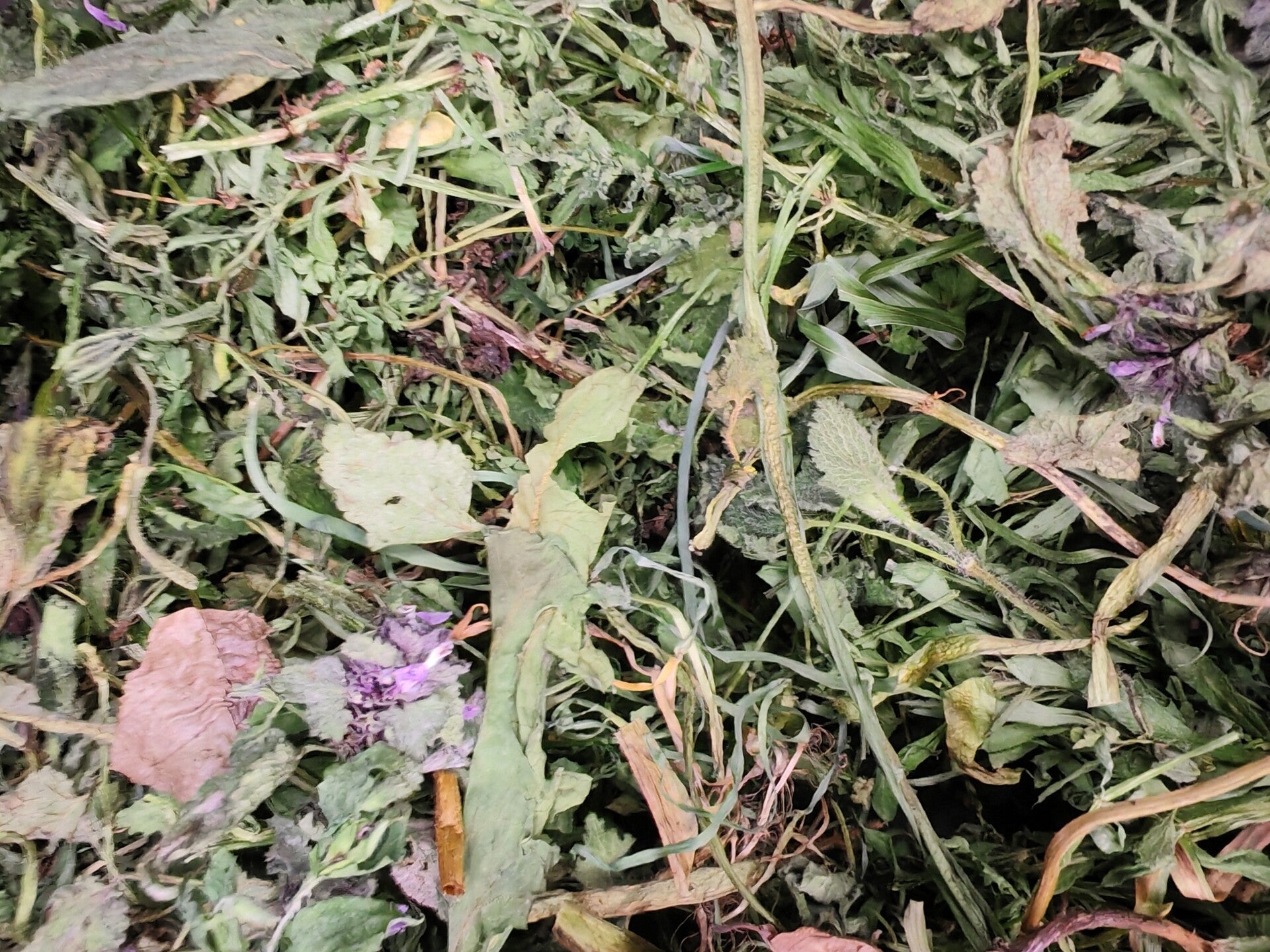
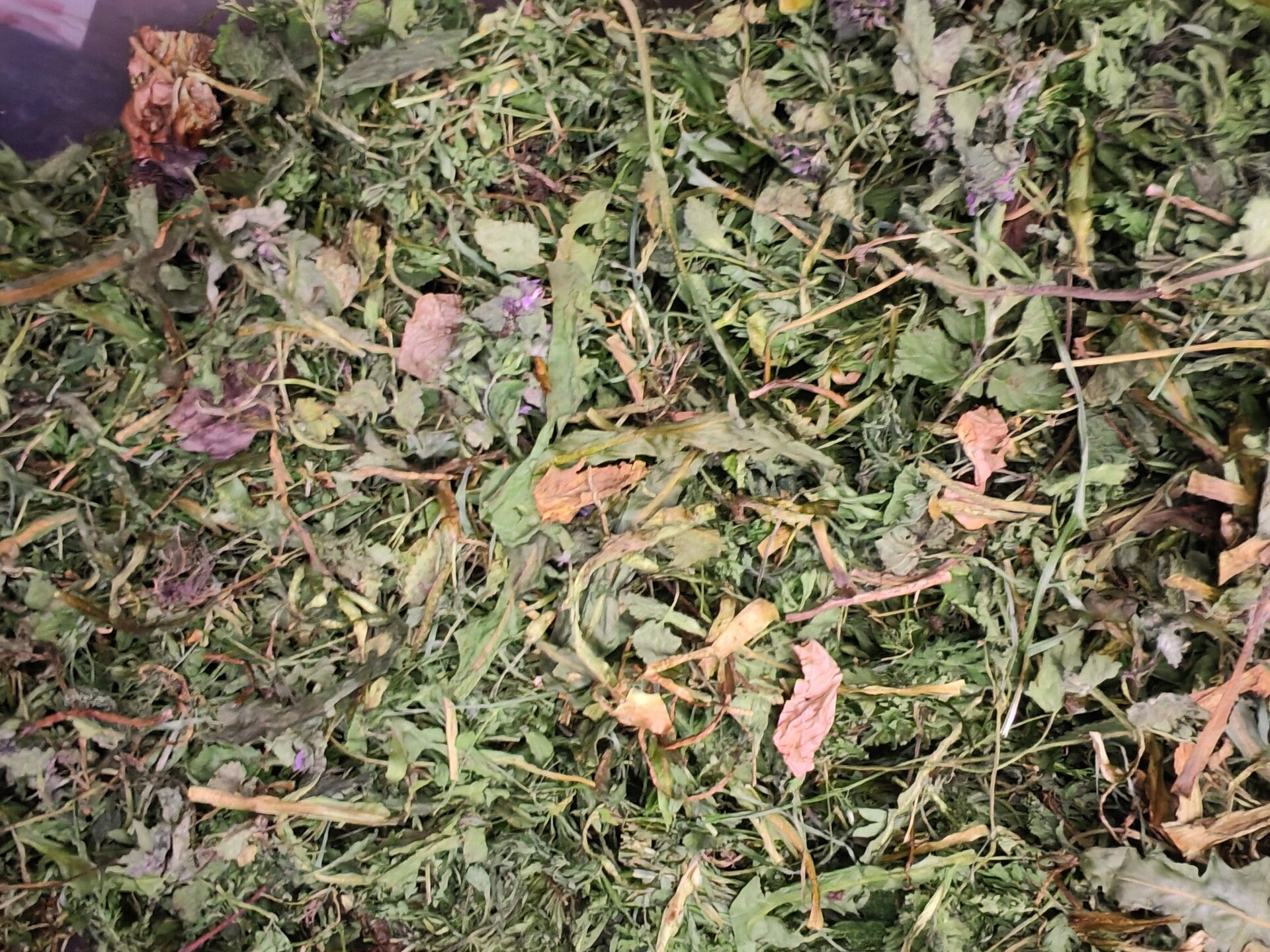
Spring Awakening Forage
45g – Approximately 2.5 Cups
Early Meadow Botanical Blend
Cow Parsley • Sow Thistle • Cleavers • Nettle • Dead Nettle
As winter fades, the first fresh plants begin to push through hedgerows, meadow edges and woodland paths. Tender cow parsley, sow thistle, cleavers and nettles emerge amongst the grasses, providing grazing animals with fresh botanical variety, fibre, vitamins and naturally occurring plant nutrients.
Spring Awakening Forage recreates that early-season grazing experience using five wild plants that naturally complement one another.
The result is a fresh, leafy blend focused on digestion, vitamins, minerals, immunity and natural vitality, while providing different textures, aromas and flavours to encourage instinctive foraging behaviour.
A simple seasonal forage inspired by the first plants animals would discover as the meadow wakes from winter.
🌿 GGT Categories
Primary Categories
✔ Digestion
✔ Vitamin
Secondary Categories
✔ Immunity
✔ Antioxidant
✔ Anti-Inflammatory
✔ Appetite
✔ Skin & Coat
🌿 Ingredients & Their Natural Benefits
🌿 Cow Parsley – 25%
The Meadow Starter
A soft, highly palatable hedgerow forage providing natural fibre and botanical variety.
Cow parsley helps encourage natural grazing behaviour while contributing to a varied, fibre-led diet that supports normal digestive function.
🌿 Sow Thistle – 25%
The Spring Foundation
A wonderfully nutritious wild forage naturally containing fibre, vitamins, minerals and beneficial plant compounds.
Sow thistle helps support digestion, appetite and general vitality, making it an excellent foundation for a spring-inspired forage.
Its soft leaves also make it especially appealing to animals that enjoy leafy meadow plants.
🌱 Cleavers – 20%
The Spring Cleanser
A classic early-season plant traditionally associated with lymphatic and urinary support.
Cleavers provide additional fibre and botanical diversity while helping create the authentic mixture of plants commonly found growing together along spring hedgerows.
🌿 Stinging Nettle – 20%
The Mineral Booster
Nettle is one of the most nutrient-dense plants found in British forage.
Naturally rich in iron, magnesium, calcium, vitamins and trace minerals, it provides valuable nutritional variety while supporting normal immune function, skin, coat and general vitality.
Nettle also contains naturally occurring antioxidant plant compounds.
🌸 Red & White Dead Nettle – 10%
The Gentle Meadow Herb
Despite the name, dead nettle doesn't sting.
Its soft leaves and flowers provide natural botanical diversity alongside naturally occurring antioxidants and micronutrients.
Dead nettle also adds another texture and flavour to the blend, encouraging exploratory feeding and natural grazing behaviours.
All ingredients are carefully dried and selected to retain as much of their natural colour, aroma and botanical character as possible.
No grains. No added sugars. No unnecessary fillers.
Just five purposeful meadow plants.
🌿 Benefits at a Glance
Digestive Support
Cow Parsley • Sow Thistle • Cleavers
A varied, fibre-rich selection of leafy plants designed to complement a healthy digestive system.
Vitamin & Mineral Support
Sow Thistle • Nettle • Dead Nettle
Naturally occurring vitamins, minerals and trace nutrients provide nutritional variety alongside the main diet.
Immunity & Vitality
Nettle • Sow Thistle
Nutrient-rich botanicals help support normal body function and everyday wellbeing.
Antioxidant Support
Nettle • Dead Nettle • Sow Thistle
Provides naturally occurring plant compounds that contribute to botanical diversity and antioxidant intake.
Appetite & Natural Grazing
Cow Parsley • Sow Thistle
Soft, aromatic and highly forageable leaves help encourage natural feeding and food-searching behaviours.
Skin & Coat Support
Nettle
The naturally occurring vitamins, minerals and plant nutrients found in nettle make it a useful botanical addition for overall skin and coat wellbeing.
🐾 Suitable For
🐹 Guinea Pigs
A particularly natural choice for guinea pigs, providing fibrous leafy forage, vitamin and mineral variety and plenty of different textures to encourage natural grazing.
🐰 Rabbits
Rabbits thrive on botanical diversity, and this leafy meadow mixture complements a hay-based diet while encouraging natural browsing and foraging.
🐭 Hamsters
Provides additional plant variety and enrichment, allowing hamsters to naturally investigate, select and forage amongst different dried plants.
🐭 Gerbils
The mixture of dried leaves provides scent, texture and food-searching opportunities alongside their normal balanced diet.
🐁 Mice
Useful for scatter feeding and enrichment, encouraging natural investigation and foraging behaviours.
🐀 Rats
Provides botanical variety, fibre and naturally occurring plant nutrients while creating additional enrichment opportunities.
🐿 Chipmunks
A small amount provides botanical variety and can be scattered around the enclosure to encourage natural food searching.
🐦 Parakeets
Small amounts of dried edible leaves can add botanical diversity and enrichment alongside a balanced diet and fresh greens.
🦎 Green Iguanas
As predominantly leaf-eating herbivores, green iguanas can enjoy small quantities mixed amongst their normal fresh leafy diet to provide extra plant diversity.
🐢 Tortoises
The mixture of leafy wild plants makes a useful dried addition to an appropriate fresh weed and plant-based diet.
🐌 Giant African Land Snails
Small quantities can provide additional dried botanical variety alongside their normal fresh plant-based foods.
🥄 Feeding Guide
Guinea Pigs: Approximately 5–10g per animal, 3–5 times per week, scattered through hay or offered as a forage topper.
Rabbits: Approximately 10–20g depending on body size, 3–5 times per week, scattered through hay or around the enclosure.
Hamsters: Approximately 1–2g, 1–2 times per week, scattered through bedding or forage areas.
Gerbils: Approximately 1–2g, 1–2 times per week, scattered through bedding for enrichment.
Mice: Approximately 0.5–1g, 1–2 times per week, offered as a small scatter forage.
Rats: Approximately 2–5g, 1–2 times per week, scattered or mixed amongst enrichment.
Chipmunks: Approximately 1–2g, 2–3 times per week, offered as a forage scatter.
Parakeets: A small pinch, 1–2 times per week, added to a forage tray or alongside fresh greens.
Green Iguanas: A small sprinkle, 1–2 times per week, mixed through fresh leafy greens.
Tortoises: Approximately 1 tablespoon, 1–3 times per week, mixed with suitable fresh weeds and plants.
Giant African Land Snails: A light sprinkle once weekly alongside suitable fresh leafy foods.
Introduce new forage gradually and always provide fresh drinking water. Hay-dependent species should have constant access to good-quality hay.
🌾 The Spirit of the Blend
When spring arrives, the meadow doesn't suddenly burst into life all at once.
It begins quietly.
Soft cow parsley appears along hedgerows. Cleavers begin climbing through neighbouring plants. Sow thistle pushes up its first tender leaves while nettles emerge wherever the soil is rich enough to support them.
Spring Awakening captures that first flush of green.
Five simple wild plants brought together to recreate the botanical variety grazing animals naturally encounter as the seasons begin to change.
🌿 Because every meadow begins with a few brave green shoots.
🌱 Full Ingredients
Cow Parsley (25%), Sow Thistle (25%), Cleavers (20%), Stinging Nettle (20%), Red & White Dead Nettle (10%).